Following Hofmann’s Footsteps



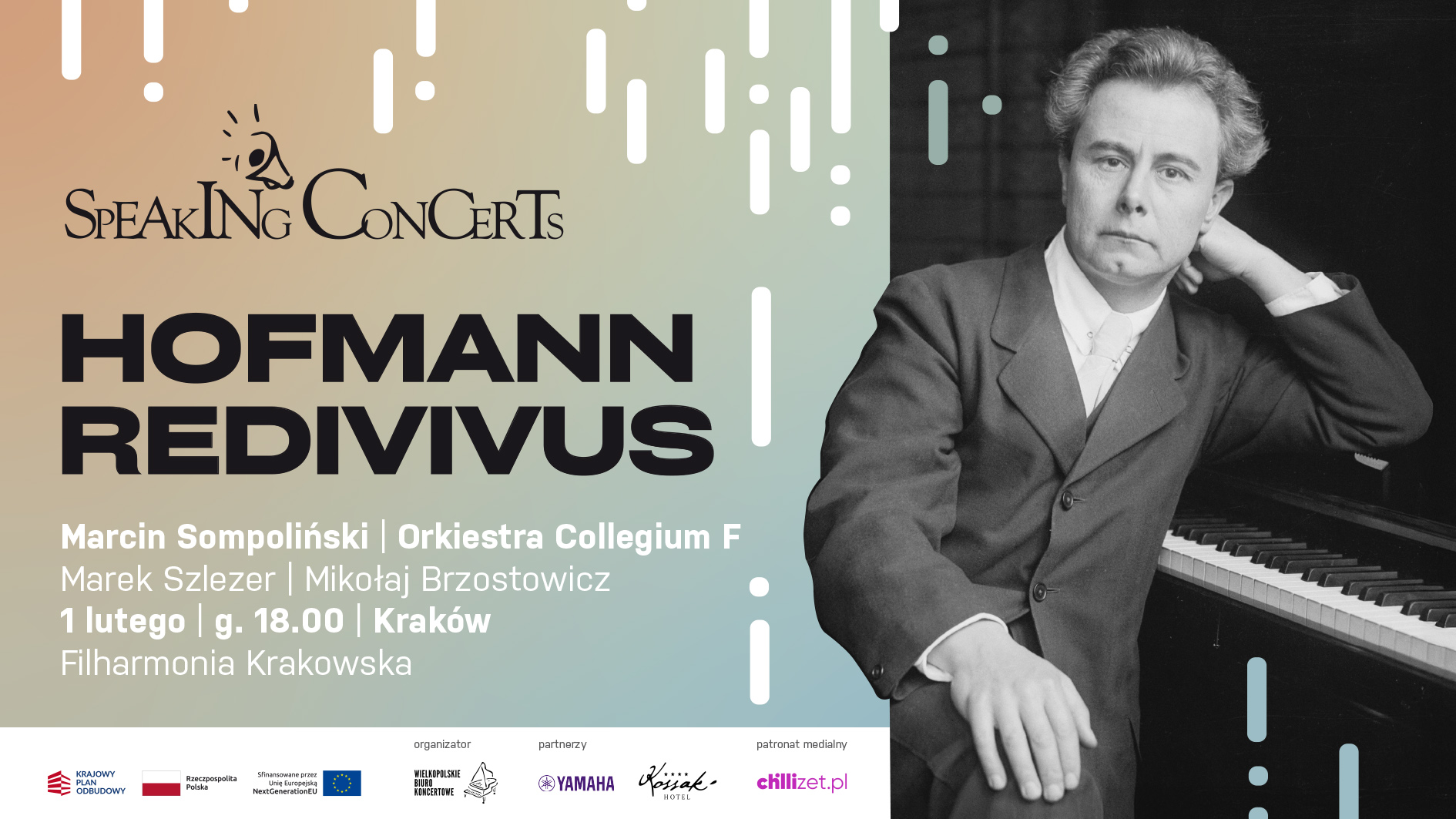
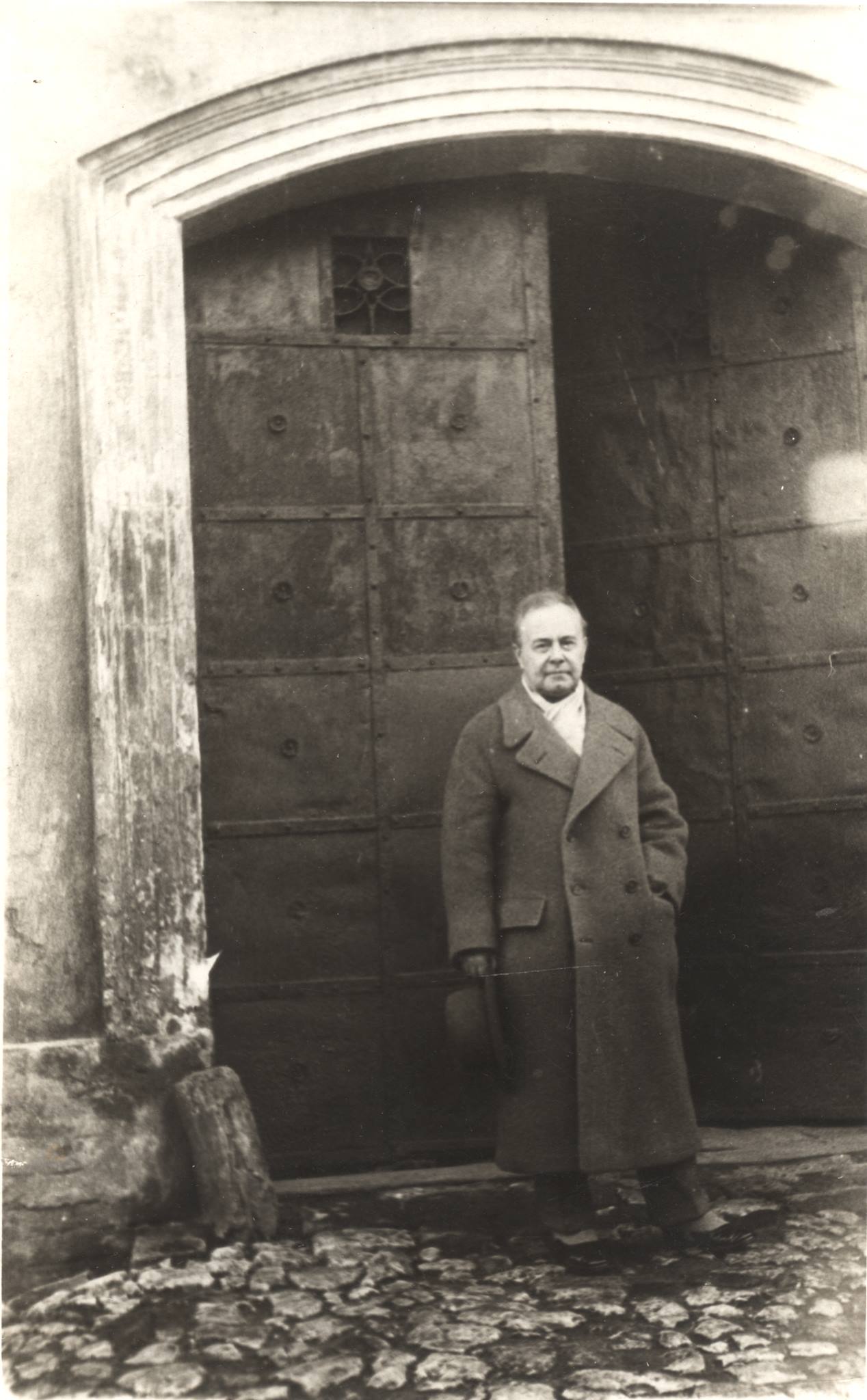
Józef Hofmann was born on January 20, 1876, in Podgórze, a district of Kraków, but he spent the first years of his life in a modest house at 7 Kurniki Street in the Kleparz area of Kraków. From a very early age, his musical talent strikingly manifested itself. Initially, he received piano lessons from his sister, then from his aunt, and eventually his father—a pianist and conductor—took over his education. At the age of only eight, he gave his first known public performance, and soon thereafter, as a boy barely over ten years old, he made his debut in Warsaw, performing Wolfgang Amadeus Mozart’s Piano Concerto in D minor. Even then, critics recognised in him something more than mere childish talent, describing his playing as “evidence of a truly exceptional talent developed beyond his years, a highly advanced technique, and even a certain degree of individualism.”
On 29 November 1887, at the age of only eleven, he appeared for the first time on the stage of the Metropolitan Opera in New York, earning enthusiastic reviews. A critic for The New York Times wrote that his playing was not childish, but possessed the maturity of an adult. Within just ten weeks, the young Hofmann gave as many as 52 concerts during his first American tour—an impressive achievement for someone so young. However, due to protests from a child welfare organisation concerned about his health and overexertion, the contract was ultimately shortened.
Having gained international fame and recognition in childhood, Hofmann received a generous scholarship from American philanthropist Alfred Corning Clark, on the condition that he refrain from public performances until the age of eighteen. This support allowed him not only to continue his musical education but also to pursue interests in the natural sciences, including mathematics, physics, and chemistry. During this period—from 1892 to 1894—he studied with one of the greatest pianists of his time, Anton Rubinstein, who accepted him as his only private pupil.
As an adult artist, Hofmann firmly established his position in the musical world, concertizing throughout Europe and Russia, as well as regularly in the United States. His playing style was exceptionally technical and precise, often described by critics as that of an “engineer operating a marvellous machine,” setting him apart from Romantic pianist-improvisers. As a composer, he initially wrote under his own name and later also under the pseudonym Michel Dvorsky. His output includes solo piano works, mazurkas, preludes, sonatas, as well as piano concertos and orchestral compositions.
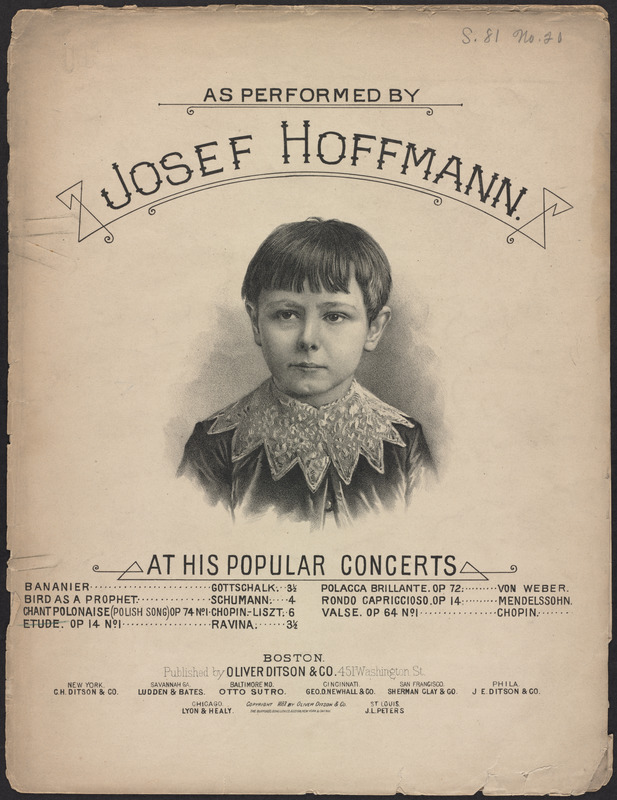
Józef Hofmann in front of his family home on Kurniki Street

Young Józef Hofmann
What made his personality truly exceptional, however, was not music alone. Józef Hofmann was a man deeply fascinated by technology and engineering. Over the course of his life, he registered more than seventy patents, and his inventions included—perhaps surprisingly—mechanical windshield wipers, reportedly inspired by the pendulum motion of a metronome; pneumatic shock absorbers; automobile springs; an adjustable pianist’s stool; and modified piano key mechanisms designed to facilitate playing, especially for pianists with smaller hands, as well as other improvements to the instrument aimed at enhancing comfort and sound quality.
His inventive imagination extended far beyond the realm of music. Among his ideas were a spiral heating element for cooking, devices for regenerating batteries, designs for motorboats, as well as various mechanical and technical solutions related to transportation. Hofmann’s life was an attempt to reconcile two seemingly opposing worlds: music—subtle, emotional, and artistic—and the precise world of technology and science. He often emphasised that, for him, music and technology mutually reinforced one another. Meticulous efforts to improve instrumental mechanics, a sense of proportion, and technical attention to every detail translated in the art of piano playing into exceptional clarity of sound, and in engineering into functionality and practical usefulness.
In 1924, Józef Hofmann became one of the founders and soon thereafter the first head of the piano department at the Curtis Institute of Music in Philadelphia—an institution he helped shape for many years and with which he remained closely associated until his resignation in 1938. With his students, he shared not only his pianistic craft but also his extensive knowledge of piano mechanics, making him an extraordinary pedagogue who combined artistic sensitivity with an engineer’s understanding of how the instrument works.
In his later years, despite continuing to compose and to pursue technical experimentation, he appeared on stage less frequently. He never, however, abandoned his passion for invention and for refining sound. Even after ending his concert career, he continued to work on piano recording systems, modified instruments, and conducted technical research, striving to preserve sound as faithfully as possible so that recordings would convey the full scope of his artistic vision.
Józef Hofmann died on 16 February 1957 in Los Angeles, leaving behind a legacy that continues to inspire—as an example of a man capable of uncompromisingly uniting artistic genius with engineering passion, musical sensitivity with structural rigour. Hofmann demonstrated that properly nurtured talent can flourish simultaneously in many fields: in art, in invention, and in education.
For contemporary musicologists, piano builders, and enthusiasts of the history of technology, the figure of Józef Hofmann stands as a fascinating testament to how broadly the concept of the “artist” can be understood—not merely as a performer, but as a creator in the fullest, most creative sense of the word. His relentless curiosity, precision, and pursuit of perfection ensure that Hofmann remains, even today, a symbol of a unique synthesis of music and technology.
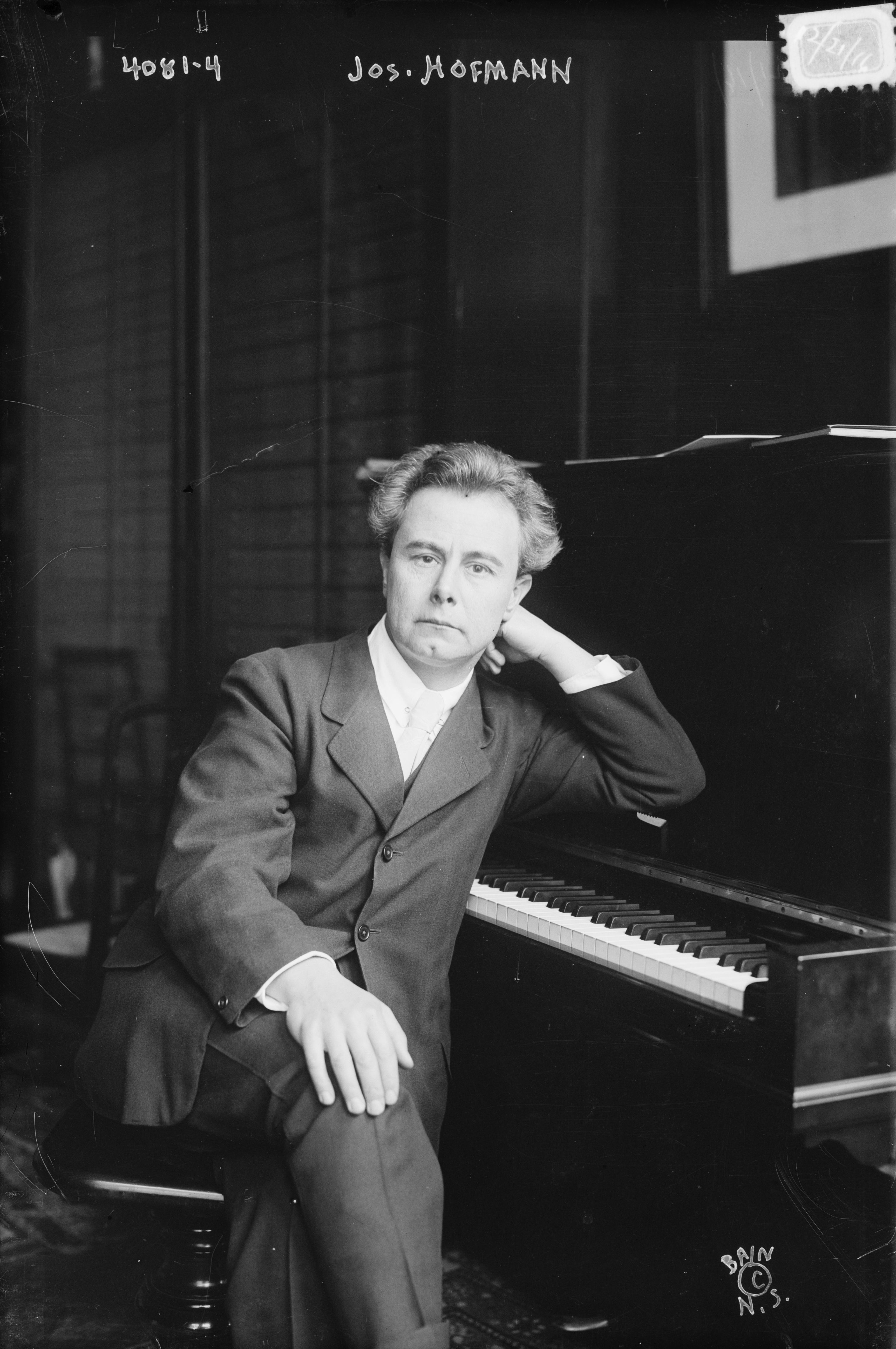
Józef Hofmann
Archives
JOSEF HOFMANN'S PLAYING

https://www.nytimes.com/1887/12/28/archives/josef-hofmanns-playing.html
HOFMANN AT HIS BEST.

https://www.nytimes.com/1888/01/01/archives/hofmann-at-his-best.html
MEDICAL COURT OF INQUIRY

https://www.nytimes.com/1888/02/23/archives/medical-court-of-inquiry-result-of-the-physicians-examination-of.html
HOFMANN STALLED IN STORM

https://www.nytimes.com/1907/12/16/archives/hofmann-stalled-in-storm-pianist-obliged-to-disappoint-montclair.html
THE NEW YORK SYMPHONY.

https://www.nytimes.com/1915/01/09/archives/the-new-york-symphony-josef-hofmann-soloist-in-chopin-concerto.html
WELCOME HOFMANN BACK.

hhttps://www.nytimes.com/1918/01/27/archives/welcome-hofmann-back-great-audience-greets-_pianist-in-carnegie-hall.html
MUSIC

https://www.nytimes.com/1921/03/21/archives/music-josef-hofmanns-recital.html
MUSIC

https://www.nytimes.com/19_24/11/23/archives/music-josef-hofmanns-recital.html
HOFMANN NOW A CITIZEN

https://www.nytimes.com/1926/11/06/archives/hofmann-now-a-citizen-pianist-receives-final-papers-in-court-at.html
CRITICS AND PIANISTS SWAP MUSES TODAY

https://www.nytimes.com/1927/01/21/archives/critics-and-pianists-swap-muses-today-olin-downes_-john-erskine-and.html
HOFMANN DEDICATES CONCERT AUDITORIUM

https://www.nytimes.com/1927/12/04/archives/hofmann-dedicates-concert-auditorium-director-of-curtis-institute.html
HOFMANN DELIGHTS THRONG

https://www.nytimes.com/1929/03/25/archives/hofmann-delights-throng-pianist-gives-a-superb-program-devoted-to.html
HOFMANN PROGRAM HAS OLD FAVORITES

https://www.nytimes.com/1937/11/29/archives/hofmann-program-has-old-favorites-master-pianists-rendition-of.html
HOFMANN IS HEARD AT CARNEGIE HALL

https://www.nytimes.com/1938/04/10/archives/hofmann-is-heard-at-carnegie-hall-audience-is-enthusiastic-artists.html
HOFMANN REPEATS STADIUM SUCCESS

https://www.nytimes.com/1938/08/16/archives/hofmann-repeats-stadium-success-another-19000-crowd-cheers-him-on.ht_ml
HOFMANN RESIGNS CURTIS MUSIC POST

https://www.nytimes.com/1938/09/27/archives/hofmann-resigns-curtis-music-post-pianist-regr_etfully-quits-his.html
HOFMANN AT BEDSIDE OF HIS VETERAN AIDE

https://www.nytimes.com/1939/04/14/archives/hofmann-at-bedside-of-his-veteran-aide-pianist-watches-conditi_on-of.html
HOFMANN AT FOURSCORE

https://www.nytimes.com/1956/01/15/archives/hofmann-at-fourscore-retired-pianist-living-in-californi_a-recalls.html
JOSEF HOFMANN, PIANIST, 81, DIES

https://www.nytimes.com/1957/02/18/archives/josef-hofmann-pianist-81-dies-former-child-prodigy-was-noted-as.html
PERVERSE DESPITE HIS GREATNESS?

https://www.nytimes.c_om/1971/08/01/archives/perverse-despite-his-greatness.html
Josepf Hofmann - Recordings
How was the “Hofmann Redivivus” project created?
The implementation of the “Hofmann Redivivus” project was accompanied by a series of webinar meetings with invited guests. Among the speakers was Prof. Krystyna Juszyńska, a specialist in the work of Józef Hofmann, as well as Pietro Zappalà, Professor of Musicology at the University of Pavia, who spoke about piano rolls.
During the preparatory stage, we also spoke directly from Philadelphia with Prof. Marcin Sompoliński about the artist’s life and the very idea behind the project.
Józef Hofmann’s Patents
Motive Power Apparatus
In 1902, Józef Hofmann patented a motive power device in which the combustion of an explosive mixture is used to heat water and generate steam, which is then mixed with exhaust gases. In this way, steam is produced as the working medium to drive a steam engine.
Process of regenerating accumulator electrodes
A 1901 patent describes a method for the chemical regeneration of battery electrodes. Hofmann proposed immersing a used electrode outside the battery in a solution of free chloric acid. The reaction converts the lead sulfate on the electrode back into lead peroxide.
Piano key action testing device
The patent concerns a device for testing the piano key mechanism. The device allows a constant force to be applied to a key and then graphically records—on paper—the changing resistance (the force required to press or lift the key). In this way, a “resistance curve” can be obtained, showing how the key responds, which is used for evaluating or regulating the piano.
Location indicator
The patent concerns a mechanical location indicator with a map tape, which measures the distance travelled by a vehicle by moving the map tape under a pointer. The invention addresses the problem of different map scales in urban and rural areas by automatically adjusting the tape’s movement speed according to the section of the route, thereby improving the accuracy of the indications.
Electrotherapeutic apparatus
This patent describes an electrotherapeutic device (diathermy) capable of generating both short and long waves for therapeutic or surgical applications. One of the key features is the use of a spark circuit along with an additional inductive/capacitive circuit, allowing for switching between modes and adjusting the wavelength.
Recorder for musical dynamics
The patent describes a device for automatically recording a pianist’s actual dynamics during performance. A mechanism placed beneath the keyboard converts the force of each key press into a corresponding movement, which controls tools that perforate or mark a paper roll to capture the dynamics.
Röntgen apparatus
The patent concerns an improvement to the X-ray apparatus. This device incorporates an automatic safety system that cuts off the power supply if the current in the X-ray tube exceeds a specified safe level. The mechanism is based on a transformer linking the high-voltage side with the low-voltage side, ensuring that the monitoring system and the cutoff switch are isolated from the high voltage.
Piano action
The patent describes an improved piano key mechanism, in which the levers connecting the keys to the hammers and dampers are designed to minimise friction and slipping of the moving parts. This allows the keys to return more quickly, respond to the most delicate touch, operate consistently regardless of climatic conditions, and experience slower wear.
Map of Józef Hofmann’s Travels
Photo Gallery
For Schools
Check What You Already Know!
We have prepared a simple educational game that allows you to test your knowledge about the extraordinary figure of Józef Hofmann. The game was created on Quizlet and is based on short questions and answers related to his life and work. In the bottom right corner, you can change the game mode and choose the one that suits you best: Flashcards, Matching, or Test. Each mode offers a different way to learn.
Good luck!
